
GUTTER PROBLEM GUIDE
Downspout Water or Ice Across Walkways & Driveways
Roof runoff crossing a walking or driving surface can create nuisance flow, refreezing and a routing problem that needs property-specific planning.
Direct answer
How can downspout discharge be kept off a walkway?
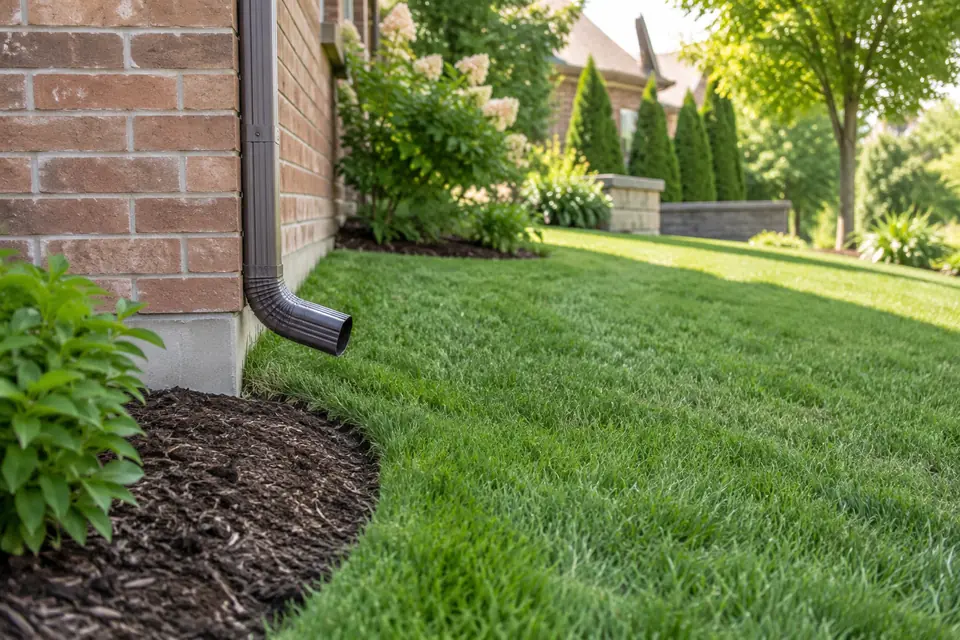
The lower route may be redirected to an appropriate surface path that carries water away from the building without sending it to a neighbour or blocking a swale. The answer depends on grade, available side yard, landscaping and property boundaries; an extension should not simply transfer the problem elsewhere.
Start with the pattern
What to observe before the site review
Track where water first reaches the hard surface, the direction it travels, where ice forms and whether the problem follows thaw cycles as well as rainfall. The timing matters: a condition that appears only under a roof valley in a short intense storm points to different questions than a slow drip that continues after the rain has stopped. Note the affected elevation, rainfall intensity, wind direction, whether the trough was recently cleaned and where the downspout releases water.
Ground-level photos taken before, during and after rain can be helpful if they can be captured safely. Do not climb a wet ladder or reach over a roof edge to investigate. A clear description of the pattern is more useful than risking a close-up.
- Exact crossing point on the walkway or driveway
- Direction of surface slope
- Available landscaped route
- Property line and neighbouring grade
- Winter ice pattern and pedestrian exposure
Possible contributors
Several components can create a similar symptom
Lower elbow orientation
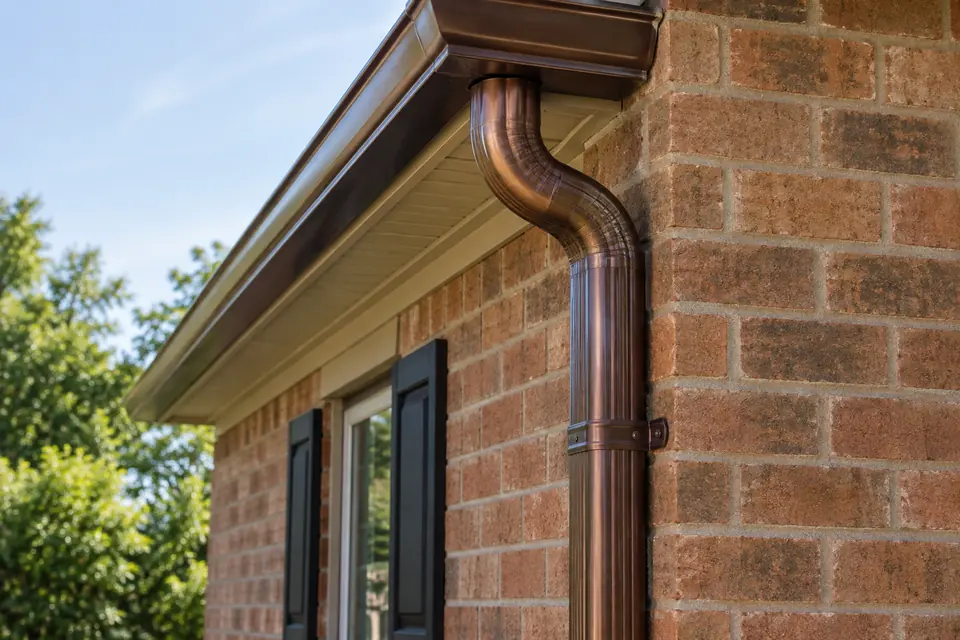
The outlet aims directly across an active hard surface.
Limited route at grade
Narrow side yards and landscaping can leave few obvious above-ground paths.
Changed surface levels
New paving, walkways or settlement may redirect flow toward the crossing.
A symptom page cannot determine which contributor applies to a specific property. The purpose of this list is to widen the inspection beyond the most obvious explanation and prevent a local patch from being mistaken for a complete solution.
Inspection sequence
Follow the water from roof edge to grade
The review should begin above the visible symptom and continue downstream. Roof geometry and valleys may concentrate water into a short run. The trough can then be checked for debris, slope, deformation, joint condition and attachment. Outlets, elbows and vertical downspouts need their own review because a restriction lower in the path can make an upper section appear undersized.
- Roof area and valleys above the affected run
- Debris, standing water and visible alignment
- Corners, seams, end caps, hangers and fascia interface
- Outlet opening and upper downspout elbows
- Vertical route, lower termination and discharge at grade
At grade, look for a splash pad, extension or hard surface that carries water away without crossing a walking route or directing concentrated flow toward a property boundary. Oakville guidance emphasizes maintaining grading, swales and surface drainage, so any proposed change needs to respect the broader lot pattern.
Repair choices
Match the response to the cause and condition
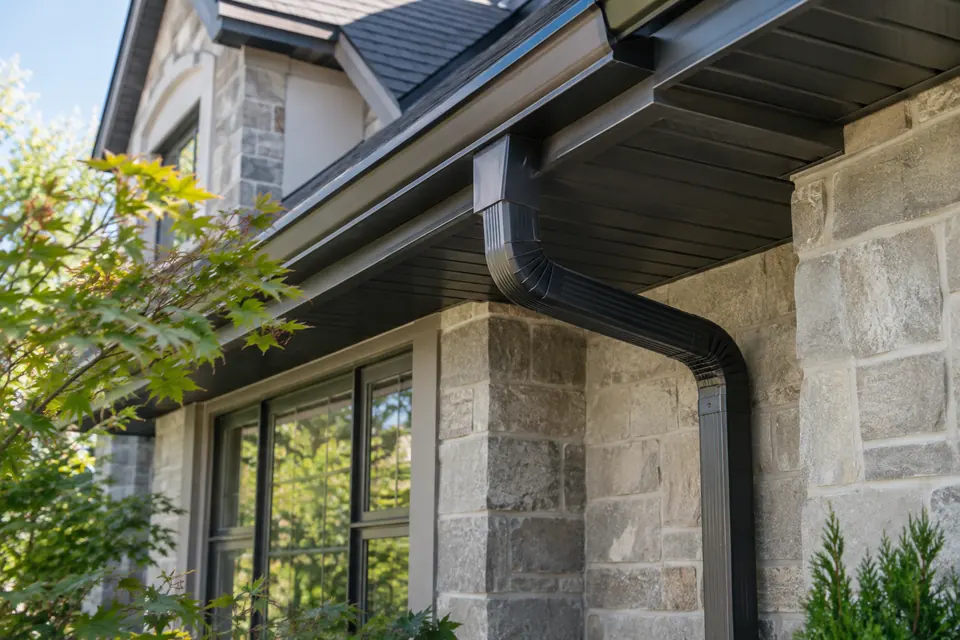
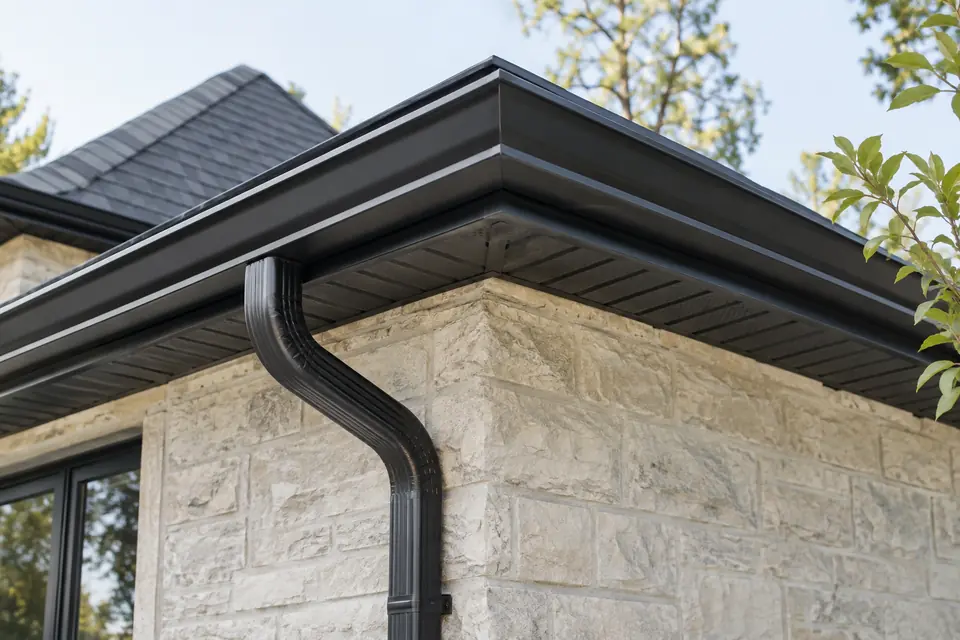
Rerouting can change the termination, add a suitable extension or use a different above-ground path. Excavation or grading changes may require separate review and should not be assumed part of ordinary gutter work. Localized work may be appropriate when surrounding material is sound and the layout still functions. Broader replacement becomes more reasonable when failures repeat across runs, attachment is unreliable, material is extensively damaged or the original outlet and downspout layout cannot handle the roof concentrations.
Cleaning is useful when debris is the actual restriction, but a clean system can still overflow because of slope, outlet placement, downspout capacity, roof valleys or system size. Likewise, resealing one corner does not correct movement, poor alignment or failed support. The scope should state which observed cause it is intended to address.
Useful evidence
Separate a one-time event from a recurring pattern
Start a simple record when the condition appears. Note the date, approximate rainfall or thaw conditions, affected elevation and the first place water leaves the intended route. A ground-level photo before rain, during the event and after surfaces begin to dry can show whether water is arriving from the roof edge, remaining in the trough, backing up at an outlet or collecting at grade. The record does not need to be technical; consistency is what makes it useful.
Also note recent changes. Roof work, new guards, tree removal, landscaping, paving, fence work, snow clearing and a relocated extension can change what reaches the system or where it releases water. If only one storm caused the symptom, unusually intense rain or wind may be relevant. If the same point fails in modest rain, a persistent restriction, low section, failed joint or layout issue deserves closer attention.
Some observations can narrow the scope without proving a diagnosis. Water flowing strongly from the lower downspout makes a complete blockage less likely, but it does not rule out a partial restriction or insufficient capacity. A dry fascia beside an active corner drip supports a local joint review, while staining along a long run suggests looking beyond one seam. Water behind the trough calls for attention to roof-edge and attachment conditions as well as the visible gutter.
Keep the response proportional to what is known. Temporary measures should never create a new hazard across a walkway, driveway or neighbour-facing boundary. Permanent work should identify the component being corrected, the adjacent material it depends on and the downstream route that must remain open. If observations contradict the original assumption, revise the scope instead of forcing the first explanation onto the property.
When the issue is urgent
Prioritize safety and active water exposure
Water crossing steps, walkways or driveways can become a slip and icing concern. Loose metal above an entrance, parking area or neighbour-facing side should be kept away from people until reviewed. If active flooding threatens electrical equipment, creates an immediate danger or involves municipal roads and sidewalks, use the appropriate emergency or municipal contact rather than waiting for routine exterior work.
For property flooding, Oakville directs residents to take immediate health and safety precautions and identifies ServiceOakville for road, sidewalk, ditch, culvert and certain drainage concerns. Basement flooding and wastewater matters involve Halton Region. Eavestrough work addresses the roof-runoff path; it does not replace emergency response, grading work, sewer investigation or foundation assessment.
Questions homeowners ask
Downspout Water or Ice Across Walkways & Driveways FAQs
Can this be diagnosed from a photo?
A photo can show the location and visible symptom, but it may not reveal internal restrictions, exact slope, concealed support or what happens during rain.
Should the gutter be replaced?
Not automatically. The decision depends on whether the issue is local, whether surrounding material and support remain sound, and whether the overall layout still works.
Could a downspout be part of the problem?
Yes. A restricted outlet, elbow or vertical run can back water up into an otherwise clean trough.
What information helps with an estimate?
Share the affected side, building height, when the issue appears, any recent cleaning or repair, the discharge location and safe ground-level photos.
Request an estimate
Describe What You Are Seeing
Include the property type, number of storeys, affected elevation, what you are noticing and any useful photos. Budget is not required to begin the conversation.