
OAKVILLE EAVESTROUGH GUIDE
Eavestrough Maintenance Guide
A property-specific approach to debris, outlets, downspouts, guards, seasonal checks, visible movement and safe maintenance planning.

Direct answer
What maintenance do eavestroughs need?
They need periodic observation and debris management based on the property’s tree cover, seeds, roof valleys, guard type, past blockages and access. Outlets, upper elbows, lower discharge, loose components, standing water and visible leaks matter as much as the open trough.
PROPERTY CYCLE
Build the schedule from what the property sheds
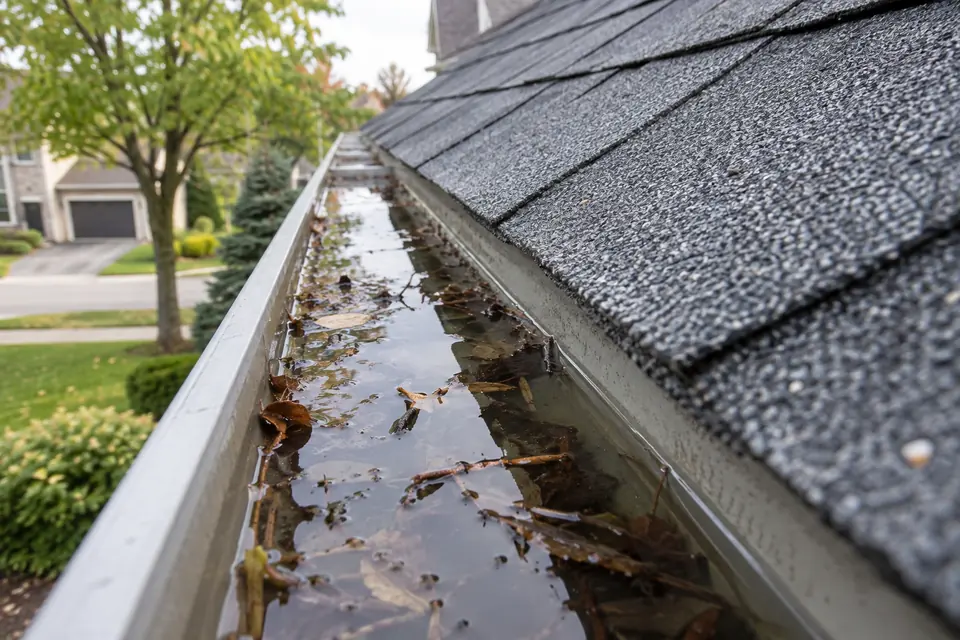
Mature trees do not all release material at the same time. Spring seeds and blossoms can block outlets before fall leaves arrive. Conifers create fine needles that behave differently on guards and in corners.
For eavestrough maintenance planning, this factor should be connected to the rest of the water path rather than treated as a stand-alone detail. Roof area and geometry influence collection; trough alignment and outlets influence movement; downspouts influence vertical capacity; and the property surface determines where concentrated runoff can go without creating a new concern.
A useful property review records what is visible, identifies what remains unknown and avoids promising a universal answer. Measurements, access, supporting material, existing drainage and municipal or property-specific constraints can change the final scope even when two buildings look similar from the street.
- Nearby tree species
- Spring and fall debris
- Wind exposure
- Roof valleys that collect material
VISIBLE CHECKS
Observe the system from the ground after rain
Look for overflow, dripping corners, water behind the trough, weak lower discharge, displaced extensions and standing water that remains visible. These observations help target a safe inspection without climbing during wet conditions.
For eavestrough maintenance planning, this factor should be connected to the rest of the water path rather than treated as a stand-alone detail. Roof area and geometry influence collection; trough alignment and outlets influence movement; downspouts influence vertical capacity; and the property surface determines where concentrated runoff can go without creating a new concern.
A useful property review records what is visible, identifies what remains unknown and avoids promising a universal answer. Measurements, access, supporting material, existing drainage and municipal or property-specific constraints can change the final scope even when two buildings look similar from the street.
- Corners and end caps
- Front-edge alignment
- Outlets and downspouts
- Splash pads and extensions
CLEANING
Clear the collection path without damaging components
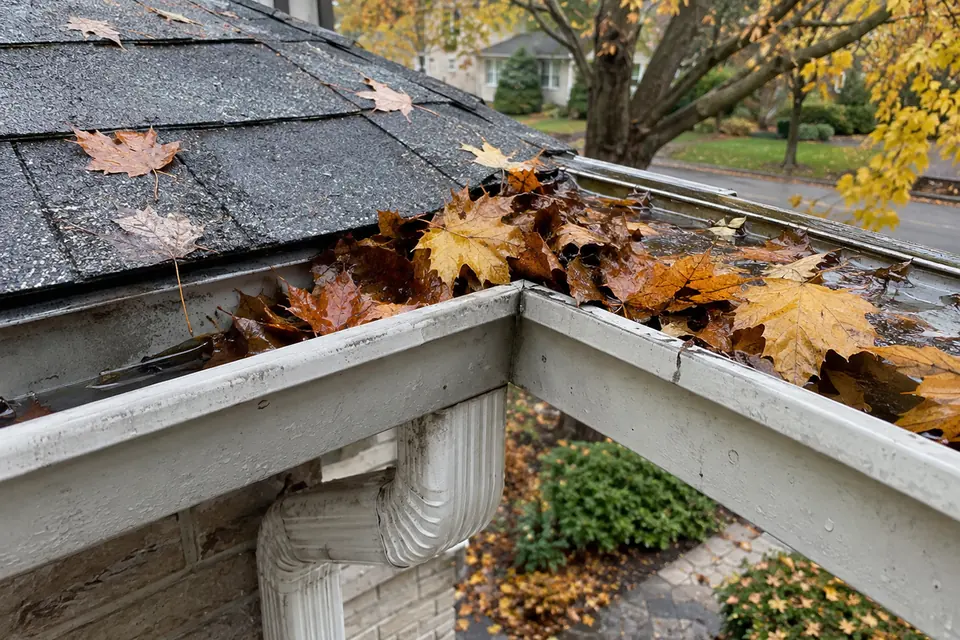
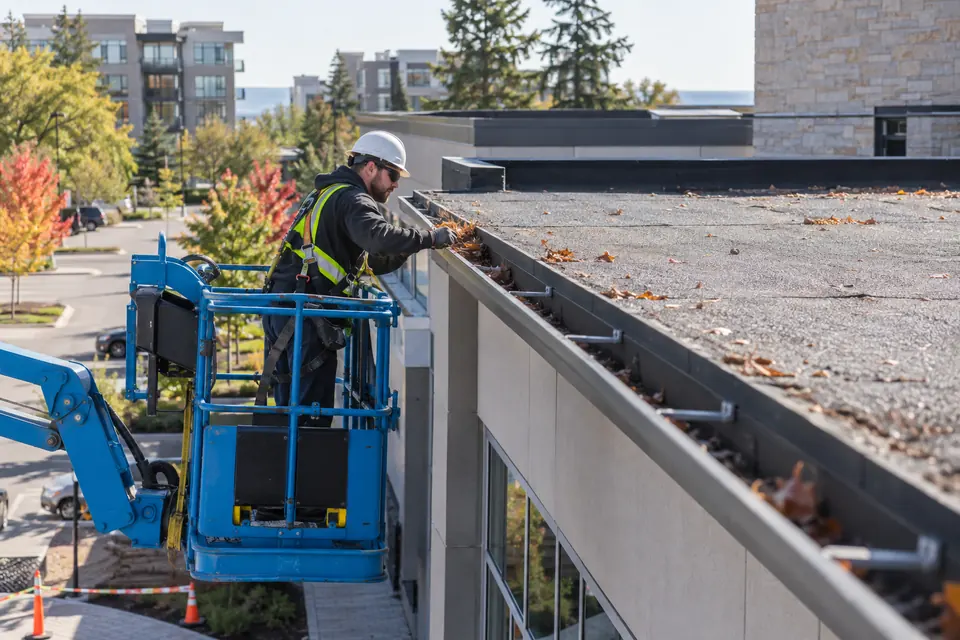
Debris should be removed with attention to outlets and guard surfaces. Aggressive tools, pressure or unsupported ladder placement can damage the roof edge. Access methods should match the height, ground and surrounding property.
For eavestrough maintenance planning, this factor should be connected to the rest of the water path rather than treated as a stand-alone detail. Roof area and geometry influence collection; trough alignment and outlets influence movement; downspouts influence vertical capacity; and the property surface determines where concentrated runoff can go without creating a new concern.
A useful property review records what is visible, identifies what remains unknown and avoids promising a universal answer. Measurements, access, supporting material, existing drainage and municipal or property-specific constraints can change the final scope even when two buildings look similar from the street.
- Trough debris
- Outlet openings
- Accessible upper elbows
- Guard surface and service access
WINTER
Check components affected by ice and snow movement
Freeze-thaw cycles can reveal low sections, move lower extensions and create icicles where water escapes. Snow and ice conditions are not a safe time for casual roof-edge access, but ground observations can inform later work.
For eavestrough maintenance planning, this factor should be connected to the rest of the water path rather than treated as a stand-alone detail. Roof area and geometry influence collection; trough alignment and outlets influence movement; downspouts influence vertical capacity; and the property surface determines where concentrated runoff can go without creating a new concern.
A useful property review records what is visible, identifies what remains unknown and avoids promising a universal answer. Measurements, access, supporting material, existing drainage and municipal or property-specific constraints can change the final scope even when two buildings look similar from the street.
- Displaced extensions
- Ice below known leak points
- Snow-slide exposure
- Spring alignment after thaw

REPAIR FLAGS
Separate maintenance from a repair condition
Cleaning cannot correct separated joints, loose attachment, damaged outlets, failed fascia or permanently deformed runs. Record those items and define a repair scope instead of repeatedly treating the symptom as debris.
For eavestrough maintenance planning, this factor should be connected to the rest of the water path rather than treated as a stand-alone detail. Roof area and geometry influence collection; trough alignment and outlets influence movement; downspouts influence vertical capacity; and the property surface determines where concentrated runoff can go without creating a new concern.
A useful property review records what is visible, identifies what remains unknown and avoids promising a universal answer. Measurements, access, supporting material, existing drainage and municipal or property-specific constraints can change the final scope even when two buildings look similar from the street.
- Recurring leak after cleaning
- Persistent standing water
- Gap behind the gutter
- Crushed downspout or loose components
NO UNIVERSAL CALENDAR
Adjust frequency using evidence
The useful interval is the one that keeps the property’s outlets open and identifies movement before water leaves the intended path. Review what was found during each visit and shorten or lengthen the interval accordingly.
For eavestrough maintenance planning, this factor should be connected to the rest of the water path rather than treated as a stand-alone detail. Roof area and geometry influence collection; trough alignment and outlets influence movement; downspouts influence vertical capacity; and the property surface determines where concentrated runoff can go without creating a new concern.
A useful property review records what is visible, identifies what remains unknown and avoids promising a universal answer. Measurements, access, supporting material, existing drainage and municipal or property-specific constraints can change the final scope even when two buildings look similar from the street.
- Amount and type of debris removed
- Condition of outlets
- Performance during intense rain
- Changes in surrounding tree cover
Apply the guide
Turn general information into a property-specific decision
Begin with the exact elevation rather than the whole building. Identify which roof planes and valleys feed that run, then follow the path through the nearest outlets, upper elbows, vertical downspouts and lower discharge. Record what can be seen safely and keep unknown conditions labelled as unknown. That discipline prevents a broad rule from being mistaken for a diagnosis.
Next, compare the proposed change with the surrounding system. A new trough still depends on attachment and fascia condition. A larger profile still depends on suitably sized outlets and downspouts. A new extension still depends on grade, hard surfaces, landscaping, swales and property boundaries. Where excavation, structural work, grade changes, protected features or municipal land are involved, confirm the appropriate approval and trade rather than assuming they are part of ordinary eavestrough work.
Finally, define how the result will be observed. Alignment, secure visible connections and a clear discharge route can be reviewed at completion, while performance under rainfall and seasonal debris may require later observation. Keep maintenance access in the design and update the plan when trees, roofing, paving or landscaping change. The most useful decision is not the most elaborate option; it is the narrowest complete scope that addresses the documented condition without transferring water or risk elsewhere.
Use the guide on your property
Questions to include with an estimate request
- Which roof areas and valleys drain to the affected run?
- What is the building height and access around that elevation?
- Where are the outlets and what size are the downspouts?
- Where does each downspout release water at grade?
- Are there walkways, driveways, swales, landscaping or boundaries near the discharge?
- Has the system been repaired, cleaned or altered before?
A complete answer still depends on the roofline, existing system, access and final discharge route. The guide helps organize those facts; it does not replace a property-specific review.
Common questions
Eavestrough Maintenance Guide FAQs
Does this guide replace a site review?
No. It organizes the relevant decisions, but measurements, access, concealed conditions and the existing drainage pattern still require property-specific review.
Can one rule apply to every Oakville home?
No. Roof geometry, grade, lot pattern, tree cover, building height and existing components vary widely.
Should the downspouts be reviewed too?
Yes. The trough, outlets, downspouts and final discharge path function as one connected system.
What should I send with an estimate request?
Include the property type, number of storeys, affected elevation, observed issue, timing and safe photos of the roof edge and discharge point.
Request an estimate
Discuss the Roofline and Drainage Plan
Include the property type, number of storeys, affected elevation, what you are noticing and any useful photos. Budget is not required to begin the conversation.