
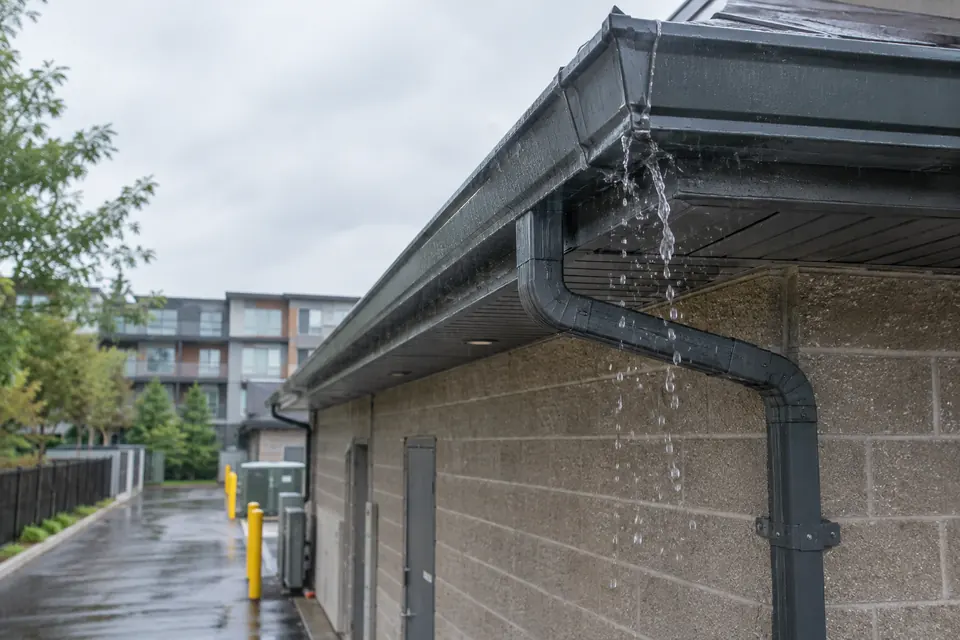
Evaluate the whole system by failure pattern, material condition, attachment, fascia, slope, outlets, downspouts, capacity and repair history before choosing a scope.
Count locations and elevations
One corner leak and widespread leaks are different conditions. Mark every drip, gap, low section, damaged outlet and poor discharge point. The distribution often matters more than the age of the system.
For eavestrough repair or replacement evaluation, this factor should be connected to the rest of the water path rather than treated as a stand-alone detail. Roof area and geometry influence collection; trough alignment and outlets influence movement; downspouts influence vertical capacity; and the property surface determines where concentrated runoff can go without creating a new concern.
A useful property review records what is visible, identifies what remains unknown and avoids promising a universal answer. Measurements, access, supporting material, existing drainage and municipal or property-specific constraints can change the final scope even when two buildings look similar from the street.
- Corners and seams
- Straight-run damage
- Attachment points
- Downspouts and lower routes
Look for deformation, puncture and corrosion
A sound aluminum run can often support a local repair. Widespread twisting, crushed sections, perforation or incompatible past patches reduce the value of repeated small work.
For eavestrough repair or replacement evaluation, this factor should be connected to the rest of the water path rather than treated as a stand-alone detail. Roof area and geometry influence collection; trough alignment and outlets influence movement; downspouts influence vertical capacity; and the property surface determines where concentrated runoff can go without creating a new concern.
A useful property review records what is visible, identifies what remains unknown and avoids promising a universal answer. Measurements, access, supporting material, existing drainage and municipal or property-specific constraints can change the final scope even when two buildings look similar from the street.
- Shape of the trough
- Surface damage
- End caps and joints
- Evidence of previous patches

Review hangers and supporting fascia
A leak repair cannot stabilize a run that is pulling away. Hangers, fasteners, fascia and concealed support where visible should be considered before the scope assumes the existing line can be retained.
For eavestrough repair or replacement evaluation, this factor should be connected to the rest of the water path rather than treated as a stand-alone detail. Roof area and geometry influence collection; trough alignment and outlets influence movement; downspouts influence vertical capacity; and the property surface determines where concentrated runoff can go without creating a new concern.
A useful property review records what is visible, identifies what remains unknown and avoids promising a universal answer. Measurements, access, supporting material, existing drainage and municipal or property-specific constraints can change the final scope even when two buildings look similar from the street.
- Hanger spacing
- Loose fasteners
- Fascia and capping
- Water behind the trough
Check slope, outlets and downspouts
A structurally sound trough may still perform poorly because it holds water, has too few outlets or feeds restricted downspouts. Replacement is an opportunity to revise layout, but some performance problems can be corrected locally.
For eavestrough repair or replacement evaluation, this factor should be connected to the rest of the water path rather than treated as a stand-alone detail. Roof area and geometry influence collection; trough alignment and outlets influence movement; downspouts influence vertical capacity; and the property surface determines where concentrated runoff can go without creating a new concern.
A useful property review records what is visible, identifies what remains unknown and avoids promising a universal answer. Measurements, access, supporting material, existing drainage and municipal or property-specific constraints can change the final scope even when two buildings look similar from the street.
- Standing water
- Outlet locations
- Upper elbows
- Lower discharge
Separate clean-system overflow from blockage
Observed overflow after cleaning can justify a capacity review, particularly below valleys. A six-inch profile is not an automatic answer; outlet and downspout changes may be more important.
For eavestrough repair or replacement evaluation, this factor should be connected to the rest of the water path rather than treated as a stand-alone detail. Roof area and geometry influence collection; trough alignment and outlets influence movement; downspouts influence vertical capacity; and the property surface determines where concentrated runoff can go without creating a new concern.
A useful property review records what is visible, identifies what remains unknown and avoids promising a universal answer. Measurements, access, supporting material, existing drainage and municipal or property-specific constraints can change the final scope even when two buildings look similar from the street.
- Roof area
- Valley flow
- Rain intensity
- Current profile and downstream capacity
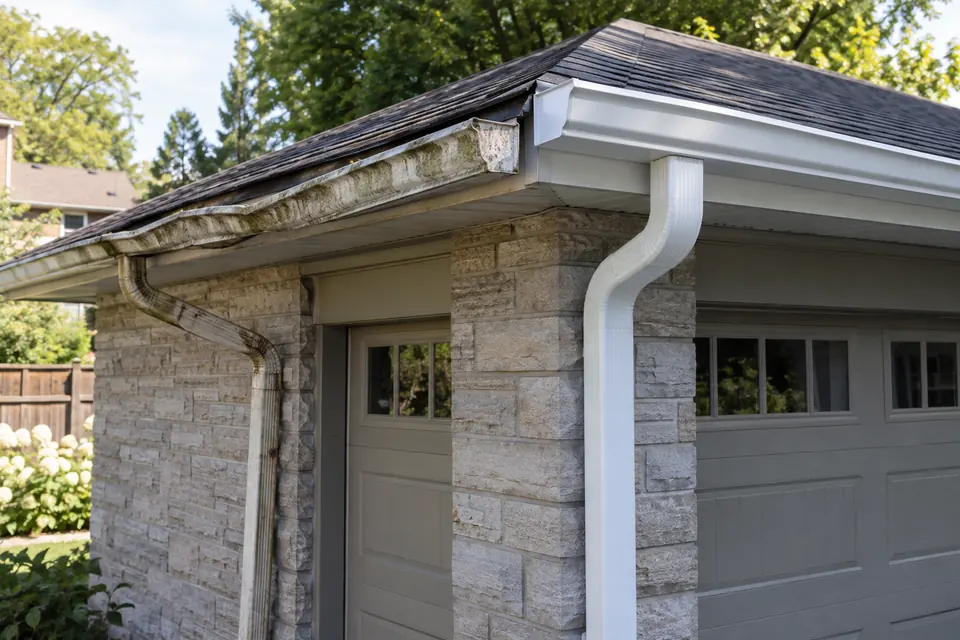
Use repeated work as evidence, not a slogan
Several repairs in different areas can suggest the system is reaching the point where broader replacement is more predictable. A successful local repair on an otherwise sound run supports continued service instead.
For eavestrough repair or replacement evaluation, this factor should be connected to the rest of the water path rather than treated as a stand-alone detail. Roof area and geometry influence collection; trough alignment and outlets influence movement; downspouts influence vertical capacity; and the property surface determines where concentrated runoff can go without creating a new concern.
A useful property review records what is visible, identifies what remains unknown and avoids promising a universal answer. Measurements, access, supporting material, existing drainage and municipal or property-specific constraints can change the final scope even when two buildings look similar from the street.
- Number of prior repairs
- Time between failures
- Same versus different locations
- Remaining sound sections
Choose the narrowest complete response
The decision may be one joint repair, a downspout replacement, one elevation, partial system replacement or full replacement. The proposal should explain why that boundary was selected and what remains outside it.
For eavestrough repair or replacement evaluation, this factor should be connected to the rest of the water path rather than treated as a stand-alone detail. Roof area and geometry influence collection; trough alignment and outlets influence movement; downspouts influence vertical capacity; and the property surface determines where concentrated runoff can go without creating a new concern.
A useful property review records what is visible, identifies what remains unknown and avoids promising a universal answer. Measurements, access, supporting material, existing drainage and municipal or property-specific constraints can change the final scope even when two buildings look similar from the street.
- Repair option
- Partial replacement
- Full system scope
- Related fascia and drainage work
How to use this information on an actual property
Read the guidance alongside the roofline rather than as a product checklist. Identify the affected elevation, the roof planes and valleys above it, the nearest outlets, the downspout route and the place where water reaches the ground. A choice that appears reasonable at the trough can still be incomplete if a restricted elbow, undersized outlet or unsuitable discharge point remains downstream.
Write down what is known and what still needs verification. Ground-level photographs can document alignment, staining, obvious damage, access and surface conditions, but they cannot confirm every fastener, concealed support surface, internal restriction or slope. Measurements and a closer inspection may change the final recommendation. When comparing quotations, make sure they address the same runs, components, removal, access, finish and drainage work.
After work is complete, observe the system during ordinary rain when it is safe to do so. Look for water entering the trough, moving toward outlets and leaving the lower downspout without crossing pedestrian routes or collecting beside the building. Seasonal debris, snow, ice, roof changes and landscaping can alter performance over time, so future maintenance should respond to the property rather than a universal calendar.
A practical field checklist before requesting a scope
Divide the property into front, rear and side elevations, then note the number of storeys and any areas where ladders or access equipment would be restricted. Record garages, porches, additions, roof valleys and detached structures separately. This makes it easier to match a photograph or symptom to a particular run instead of describing the entire roofline as one undifferentiated system.
For each affected run, note whether the concern appears in light rain, prolonged rain, a short intense storm, snowmelt or freezing conditions. Look safely from the ground for staining, separated joints, uneven alignment, loose components, debris, water behind the trough and the strength of flow at the bottom of the downspout. Include recent roofing, tree, paving or landscaping changes because they may alter either the volume entering the system or the route available at grade.
Ask the proposal to distinguish observed conditions from assumptions and to identify the exact components included. Profile, colour, corners, outlets, downspouts, guards, removal, disposal, fascia-related limits and discharge work should be clear. If the proposed work depends on excavation, grade changes, municipal land, shared property features or concealed support, confirm how those boundaries will be handled before scheduling. A well-defined scope makes later comparison and maintenance more useful even when the final recommendation changes after closer inspection.
Questions homeowners ask
Can photos provide a final answer?
Photos help show visible condition and access, but measurements, support, internal restrictions and grade may still need a site review.
Should every property use the same solution?
No. Roof geometry, tree cover, profile, outlets, downspouts, access and surface drainage vary.
What should an estimate identify?
It should identify the property and elevation, components included, materials, access, removal, discharge work, exclusions and conditions that could change scope.
Request an Oakville eavestrough estimate
Share the property type, affected elevation, what happens during rain and any photos that show the roofline or discharge point.